

Work is peace infrastructure.
Fulfilling Jobs for Peace brings young people together to understand what matters to them, learn with others, and shape their own paths toward work with income, dignity, and meaning.
Join the conversation → | Learn more →
Start with the person
Finding work is only part of the question.
What matters to you? What are you good at? What kind of life do you want to build? What can you contribute? And what stands between where you are now and where you want to go?
Many young people have little space to explore those questions before the pressure to earn, study or meet other people’s expectations takes over.
We want to create more room for them.
Explore the journey →
Listen before solutions
We are starting with young people’s experience.
The first cohort will take these questions into the networks and communities they already know. They will listen to how young people earn a living, what makes work uncertain, what they hope for and what they are already doing to move forward.
The conversations will not all look the same. Some may happen one-to-one. Others may take place with small groups, through community gatherings, media, social networks or existing youth initiatives.
What matters is what we learn.
Where we hope this leads
Over the next five years, we want more young people to have what too often depends on luck: space to understand themselves, people they can learn with, and connections that help them see and shape different possibilities.
We hope the first conversations grow into a peer-led network where young people support one another and share what they find useful.
We want those ideas to travel without everything depending on a large organisation at the centre.
Join the conversation
You do not need to have a plan worked out.
You can share your experience, join a conversation, bring a few people together or tell us about something you are already doing.
Listen before solutions
We are beginning with young people’s experience.
The first cohort will take these questions into the networks and communities they already know. They will listen to how young people earn a living, what makes work uncertain, what they hope for and what they are already doing to move forward.
The conversations will not all look the same. Some may happen one to one. Others may take place with small groups, through community gatherings, media, social networks or existing youth initiatives.
What matters is what we learn.
Where we hope this leads
Over the next five years, we want more young people to have what too often depends on luck: space to understand themselves, people they can learn with, and connections that help them see and shape different possibilities.
We hope the first conversations grow into a peer-led network where young people support one another and share what they find useful.
We want those ideas to travel without everything depending on a large organisation at the centre.
Join the conversation
You do not need to have a plan worked out. You can share your experience, join a conversation, bring a few people together or tell us about something you are already doing.

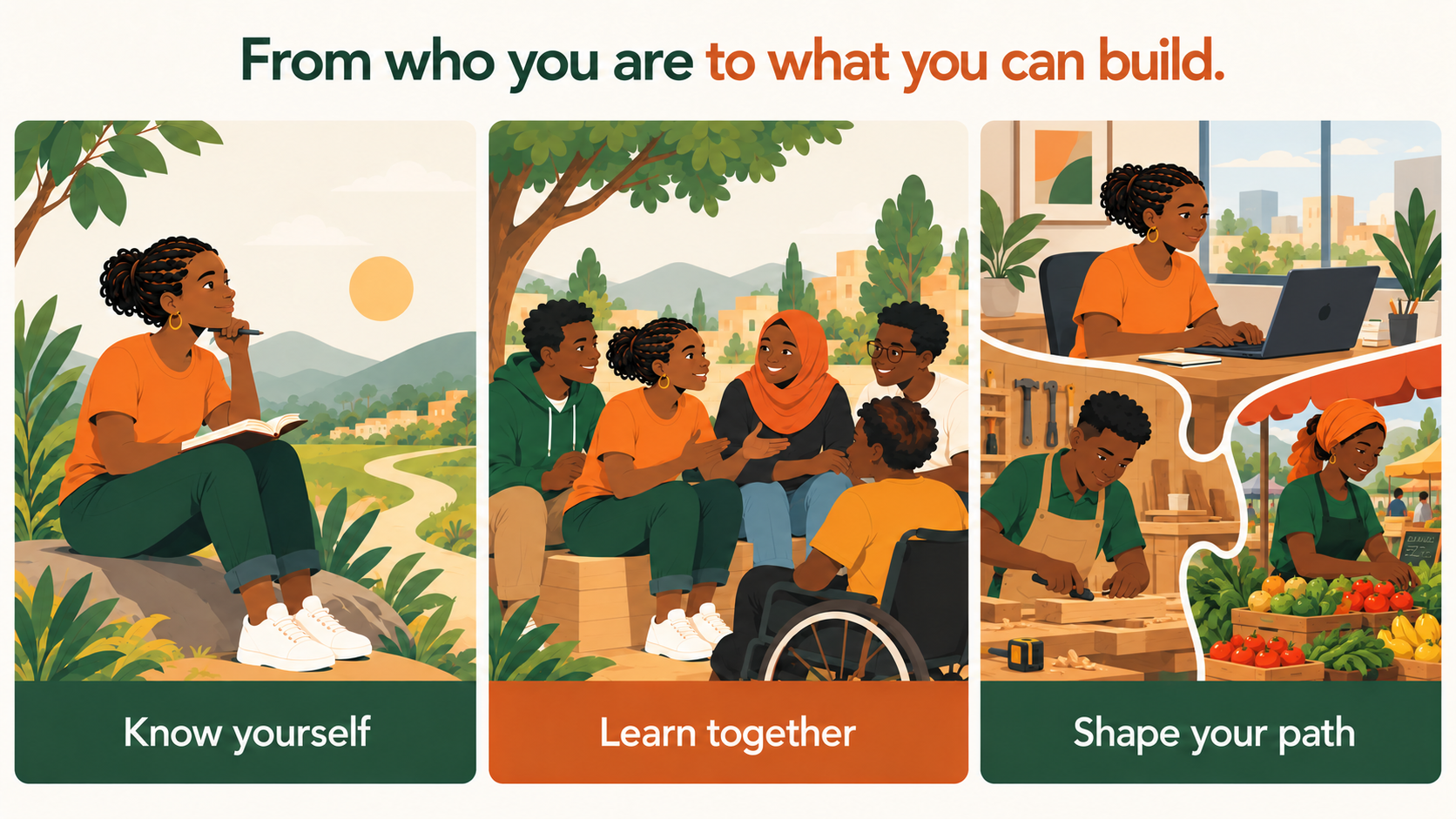
Know yourself
Before deciding what work to pursue, it helps to understand what matters to you, what you are good at and what kind of life you want to build. Many young people have never had much space to think about those questions because the pressure to earn, study or meet other people's expectations comes first.
Fulfilling Jobs for Peace starts from the view that every young person already brings something. Values, skills, experience, curiosity and the ability to make choices are not things a programme gives you. They are already part of who you are. The first step is recognising them and beginning to see where they might lead.
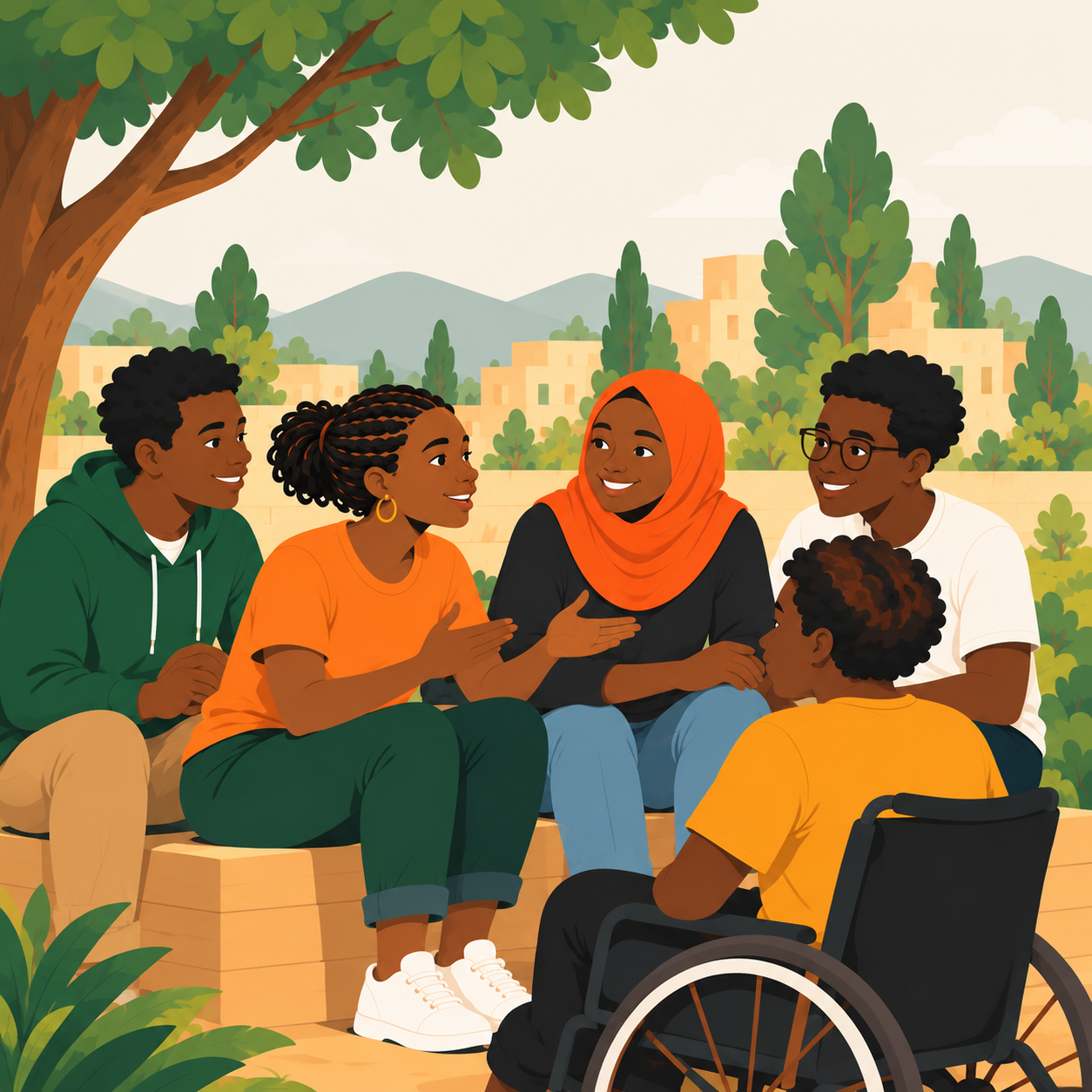
Learn together
Finding your own path does not mean doing everything alone. Other young people can share experience, challenge assumptions, offer encouragement and introduce possibilities that may not have been visible before.
That is why peer learning and peer support are central to the initiative. Young people listen to one another, compare experiences and help one another think through choices. People with more experience can also offer mentoring, knowledge, and connections when useful, but their role is to support rather than decide the direction.
The aim is not for one person to have all the answers. It is to create a space where people can ask better questions and learn from what others have already tried.
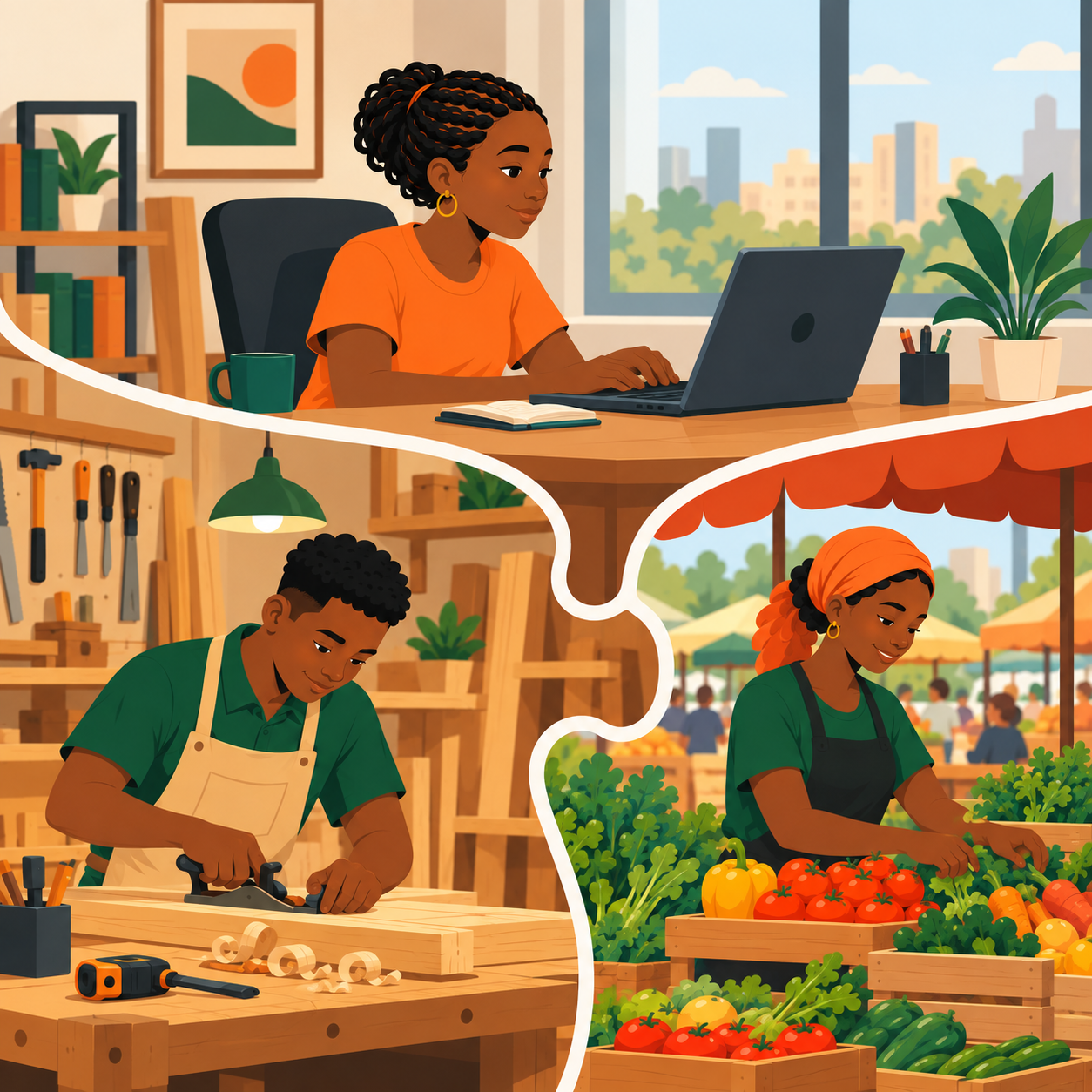
Shape your path
There is no single picture of fulfilling work. For one person, it may be building a business. For another, it may be a profession, skilled informal work, creative work or combining several sources of income.
What matters is having more room to make choices that reflect your values, abilities, circumstances and hopes for the future. A job may meet an immediate need and still not feel fulfilling. Work begins to mean more when it also offers dignity, room to grow and the sense that what you do matters to other people.
The path may change over time. The point is not to choose perfectly once. It is to become better able to recognise what fits, learn from experience and make the next choice with more confidence.
Where we hope this leads
Over the next five years, we want more young people to have what too often depends on luck: space to understand themselves, people to learn with, and the confidence and connections to shape their own path.
We want the first conversations to grow into a peer-led network where young people support one another, test ideas in their own communities and share what proves useful. Girls and young women need to be central to that work because pressures can shape their choices about education, work, care, mobility and family in ways different from those faced by young men.
The ambition is not to build a large organisation that sits at the centre of everything. It is to develop simple ways of learning, connecting and sharing that young people can use in their own settings and adapt to what makes sense there.
How it can grow
For us, scale does not mean copying the same programme from one place to another. It means finding simple patterns that people can recognise, use and pass on.
A useful question can travel. A peer conversation can be repeated. A practical tool can be adapted. A story from one community can open a new possibility in another. Someone who has found something useful can share it with friends, colleagues or a wider network, and they can change it again through their own experience.
We are beginning with the first cohort and the people they already know. They will test the questions, listen to what comes back and help us see what needs to change. What proves useful can then spread through peer networks, community conversations, social media, and a growing knowledge platform.
The aim is to reach far beyond the first cohort without making every idea, conversation or action depend on a central organisation. Growth should come from people finding value in the approach and choosing to carry it forward.
What makes this different
Many youth employment efforts begin with jobs, skills or training. Those can be essential, especially when income is needed now, and Fulfilling Jobs for Peace does not dismiss their value.
We simply begin earlier. Before asking what job someone should do, we want to understand who they are, what they value, what they can already do and what kind of future they want to build. We also want to understand the work young people are already doing, including the informal and less visible forms of work that often receive little attention.
That is why listening matters so much at the beginning. The first ideas behind Fulfilling Jobs for Peace are not fixed, and they should not be. Young people will test them, challenge them and change them as the work develops.
If young people are meant to shape their own paths, they also need a real hand in shaping what Fulfilling Jobs for Peace becomes.