

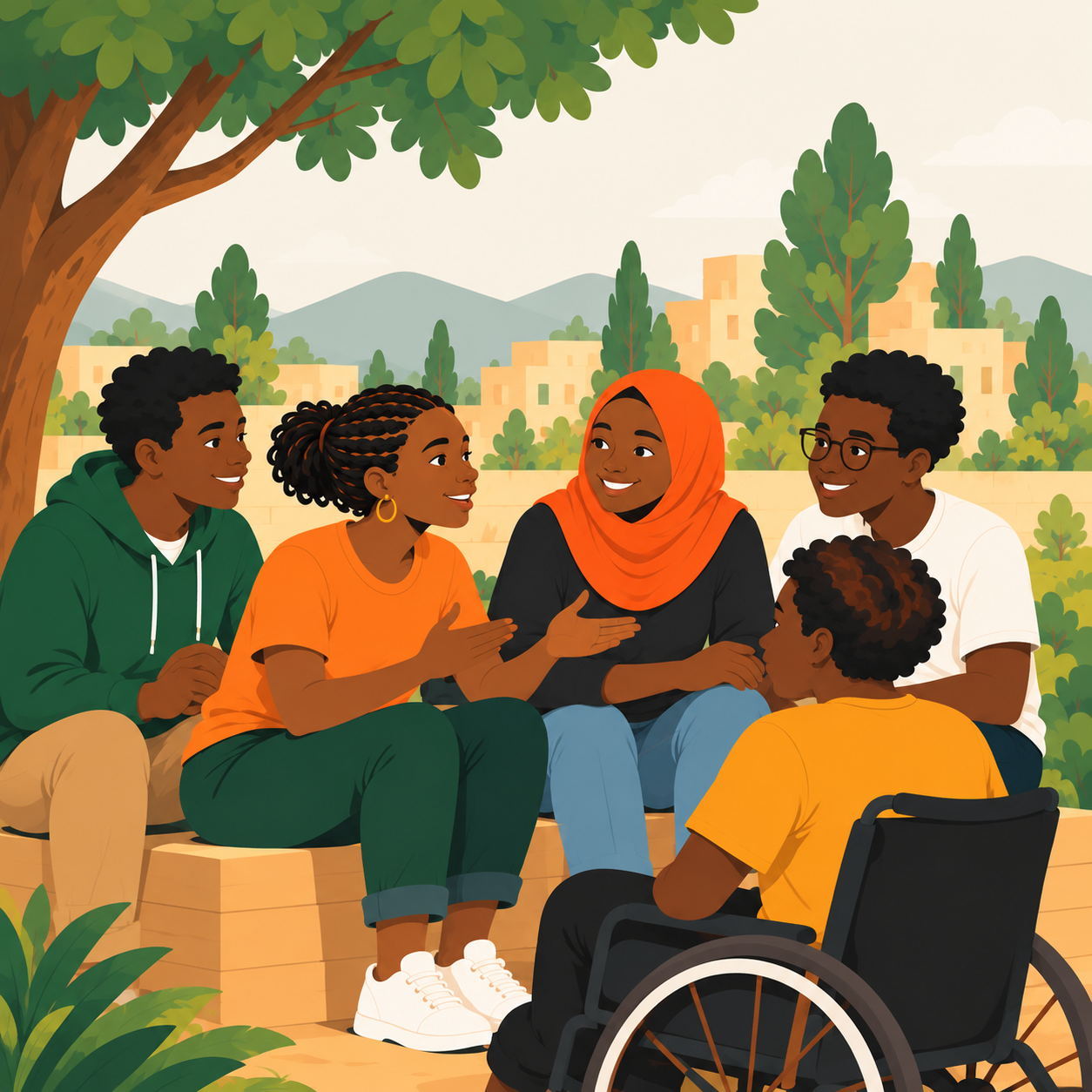
Few paths are shaped alone
Most people can think of someone who helped them see something differently. A friend shared an experience. A teacher asked a useful question. Someone made an introduction. A person further along showed that another route was possible.
Fulfilling Jobs for Peace treats those relationships as part of how people find their way.
Experience carries knowledge
A young person does not need to be an expert to have something worth sharing. Someone running a small business knows things about customers, risk and uncertainty that may never appear in a textbook. Someone earning informally knows what it means to live with changing income. Someone who changed direction after years of study may understand the fear of disappointing other people. Even something that did not work can carry useful knowledge.
Too often that experience stays with the person who lived it. We want to create more opportunities for it to move.
Peers can widen what we see
Learning from someone else does not mean copying their path. Another young person may challenge an assumption, name a problem differently or show you an option you had not considered. They may know someone you should meet or point towards an opportunity outside your usual networks. You may be able to do the same for them. For that to work, people need space to talk about uncertainty and mistakes, not only success.
Mentors can support without deciding
Peers are one part of the picture. People with more experience may also have something useful to offer. A mentor can listen and ask questions. Someone working in a particular field can explain what the work is really like. A business owner may open a door. Another person may simply introduce two people who should know each other. Their role is not to decide someone else’s direction.
Good support should leave a young person with more confidence and agency, not less.
Different people need different spaces
Useful learning does not require one standard format. Some people may speak openly in a small group. Others may prefer a one-to-one conversation. Media, social networks, community gatherings and activities that already exist may reach people who would never respond to a formal invitation. The first cohort helps us test these different routes. The question is not which format looks most impressive. It is which one helps people speak honestly and learn something useful.
Start with what already exists
Young people are already building businesses, supporting peers, organising communities and finding their own ways through difficult work environments. Some of the practices we need may already exist but remain disconnected or unseen. Fulfilling Jobs for Peace should first learn from those efforts.
Over time, the people who started the initiative should become less central as young people grow more confident supporting and leading one another.
