

Help useful learning travel
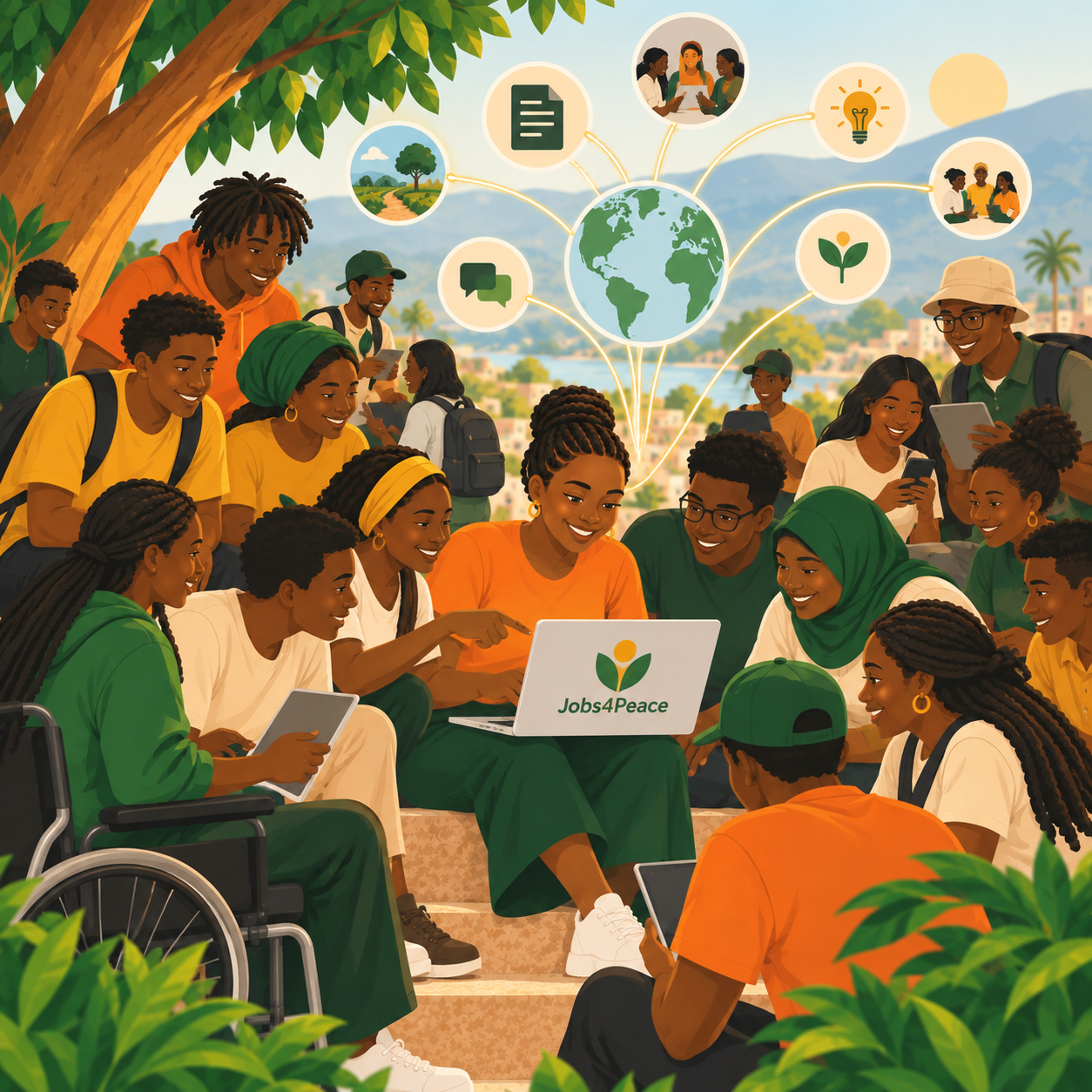
Fulfilling Jobs for Peace already has a website. That does not mean it has a platform.
The platform should come from what people have actually tried, learnt and found useful. Building it too early would give us somewhere to store things before we know what deserves to be stored.
A shared memory
As conversations and local activity grow, useful knowledge will emerge. Some of it will be personal. Someone may discover a strength or see a different direction.
Some will be practical. A group may find a better way to connect peers, run a conversation or respond to a local barrier.
Some will come from research and from organisations already working on related issues.
The platform can give those different forms of learning a shared home.
Make useful things easy to find
Over time, the site might hold young people’s stories, questions, simple conversation guides, short learning notes, examples of what people are trying and carefully chosen research.
It can also help people working on similar questions find one another.
The aim is not to collect everything. The test should be whether something is useful enough that another person might act differently because they found it.
Share without standardising
Something that works in one community may need to change somewhere else.
A question may travel almost unchanged. A tool may need translation. A peer-learning format may work well in one setting and fail in another.
That is healthy. The platform should make adaptation easier, not turn early learning into rules.
Guardrails matter
A shared knowledge space also needs boundaries.
Contributions should respect people’s dignity and privacy. Stories and images should be shared with consent. The platform should not promote discrimination, exploitation, misleading job offers or harmful opportunities.
We should also distinguish lived experience from factual claims. If something is presented as research or evidence, people should be able to see where it comes from.
These guardrails protect trust without requiring us to control every idea.
Technology is a means
Social media, video and digital tools can help questions and ideas reach many more people. But reach alone tells us little about whether something helped.
The platform should support relationships, learning and action rather than become the centre around which everything has to revolve.
A useful idea should be able to leave the platform and live somewhere else.
When the platform is working
The strongest sign may be that people can use what has emerged without needing Fulfilling Jobs for Peace to organise it for them.
Someone finds a question and uses it with friends. A facilitator adapts a tool. A young person reads about something tried elsewhere and tests a version locally. Two groups discover each other and begin sharing directly.
Knowledge has travelled. The centre has become less necessary.
